Date: XII January, MMXXVI
Subject: Calendula officinalis (The “Flower of the Calends”)
Medium: Olea europaea (Extra Virgin Olive Oil)
I. “The flower that follows the Chariot of Helios…”
Fragment 24: On the Golden Flower of the Calendae “Let the seeker take the flower that follows the sun, gathered when the heat is highest and the dew has fled. Submerge the petals in the pressed fruit of the Athena-tree (Olive), ensuring no water enters the vessel, lest the spirit of the plant turn to rot. Place it where the light of Helios may strike it for one full cycle of the moon. Only then is the sun’s fire captured in the oil, ready to mend the skin of the weary traveler.”
II. THE TRANSLATOR’S NOTE
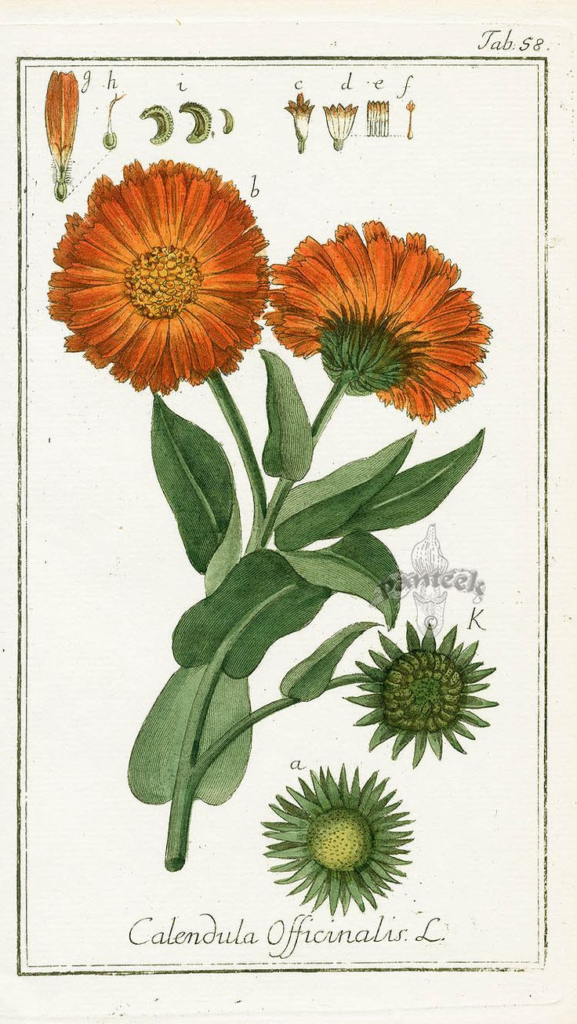
As a student of the ancient world, I couldn’t help but approach my first herbal infusion as a piece of living history. In the works of Theophrastus (c. 300 BC), we see the first stirrings of botanical classification, where he speaks of Caltha — the likely ancestor of Calendula.
By choosing Olive Oil (Olea europaea), I’m following the exact tradition of the Greek myrepsos (perfume-makers and apothecaries). They knew what we know now: olive oil is incredibly stable and a perfect menstruum (the ancient term for a solvent) for extracting the resins and flavonoids from the flower.
III. THE RESEARCHER’S ARCHIVE
For those who wish to consult the scrolls themselves, here are the primary sources that informed my maceration:
- Theophrastus (c. 371 BC): Enquiry into Plants. He discusses the “pot-herbs” and the nature of “sun-following” flowers. Read: Book VII – Loeb Classical Library
- The Ebers Papyrus (c. 1550 BC): An Egyptian medical papyrus listing botanical recipes for skin healing. View: The Ebers Papyrus Digital Archive
- Pliny the Elder (1st Cent. AD): Though writing later, he compiles centuries of BC-era knowledge on the Caltha. Read: Natural History, Book XXI – Perseus Digital Library
III. THE RITUAL
I began this maceration on November 29, 2025, just as the world was tilting toward the winter dark. I followed the “Simpler’s Method,” a technique that relies on the slow alchemy of time.
- I filled a glass vessel half-full with dried petals. The ancients knew that moisture invites the spirits of decay (mold).
- I submerged the petals in a ratio of one part sun-dried petals to three parts liquid gold (Olive Oil).
- For 44 days, this vessel sat through the darkest period of the year, including the Winter Solstice. In Sympathetic Medicine, infusing a solar flower like Calendula during the return of the light is seen as a way to “capture the rising sun.”
V. MARGINALIA
- As the Olive tree was the sacred gift of Athena to the people of Athens, the oil represents the Wisdom of the Goddess serving as a vessel for the Vitality of Apollo (the Sun).
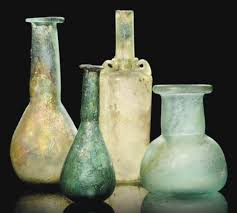
- While I am using a Mason jar, a Roman medicus would have decanted the final product into a ceramic Unguentarium.
V. EPILOGUE
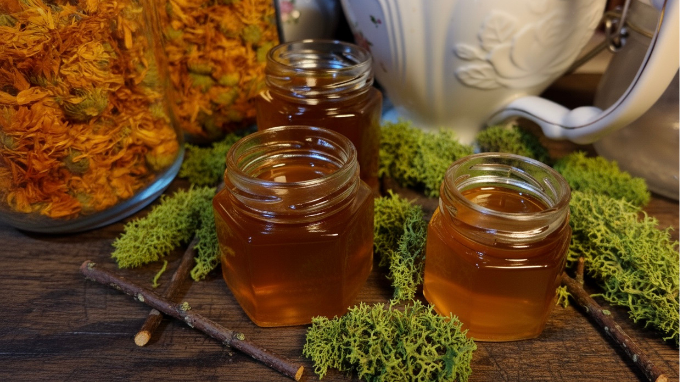
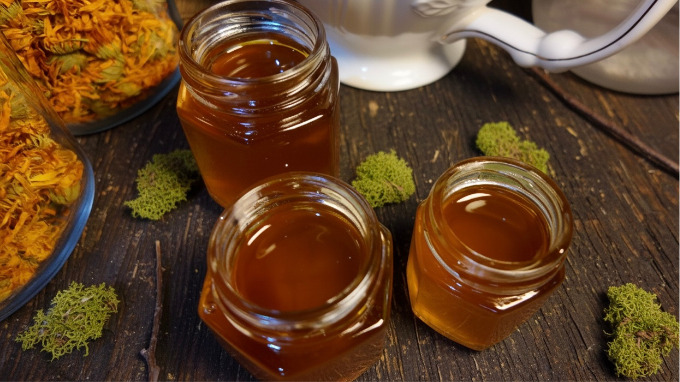
As of January 12, the 44-day cycle is complete. The oil has transitioned to a deep, translucent amber, visual evidence that the plant’s chemical “soul” has migrated into the lipid base. The final act of this reconstruction is the Expression: straining the liquid through fine linen to isolate the potent solar oil.
What remains is a shelf-stable relic of the sun, prepared exactly as it might have been in the courts of a Greek basileus.